Chinese Ambassador: The U.S. Accusation of Chinese Nuclear Explosive Tests Is Completely Groundless
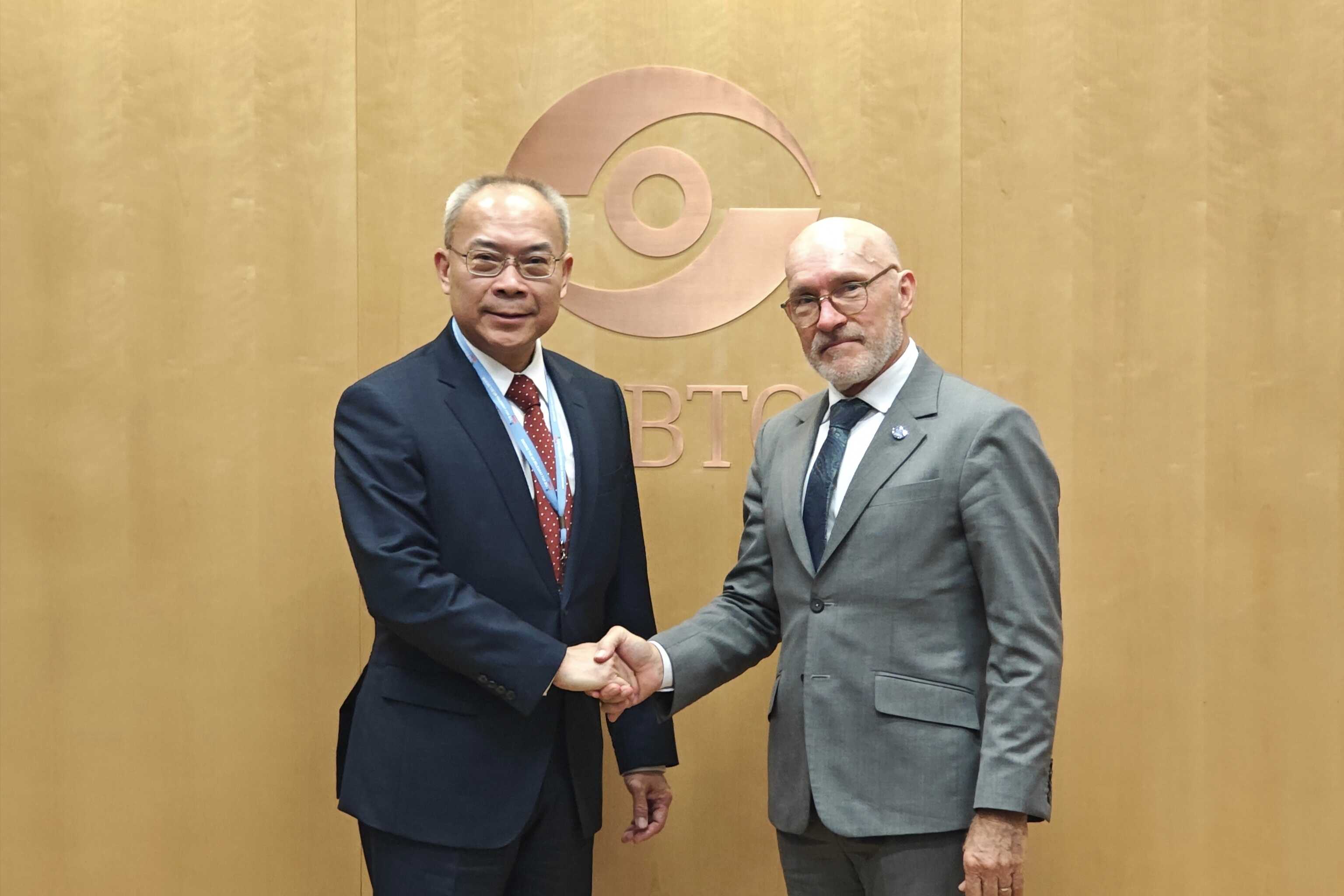
On 11 February, Ambassador Li Song, Permanent Representative of China to the United Nations and other international organizations in Vienna, gave an interview to the media, firmly refuting the accusations of the U.S. that China has conducted a nuclear explosive test.
Ambassador Li stated that Mr. DiNanno, U.S. Under Secretary of State, recently made unwarranted remarks at the Conference on Disarmament in Geneva, accusing China of having conducted a nuclear explosive test in June 2020. In response, Dr. Robert Floyd, Executive Secretary of the Comprehensive Nuclear-Test-Ban Treaty Organization (CTBTO), immediately issued a statement clarifying that the International Monitoring System of CTBTO did not detect any event consistent with the characteristics of a nuclear weapon test explosion at that time. Subsequent, more detailed analyses have not altered that determination.
This fully demonstrates that U.S. accusation of Chinese nuclear explosive tests is completely groundless. The actions of the U.S. are extremely irresponsible and driven by ulterior motives, aimed at fabricating pretexts for its own resumption of nuclear tests. China firmly rejects this.
Ambassador Li said that he met with Dr. Robert Floyd yesterday, during which he firmly refuted the groundless accusations made by the U.S. and reiterated China’s firm commitment to and steadfast support for the Comprehensive Nuclear-Test-Ban Treaty (CTBT). China is among the first countries to sign the CTBT and has consistently and firmly supported its purposes and objectives.
Since announcing a moratorium on nuclear testing in 1996, China has strictly honored its commitment, has never conducted any activities in violation of its obligations. China resolutely upheld the international consensus on banning nuclear tests, receiving high recognition from the international community.
China actively supports the development of the CTBTO International Monitoring System. In 2025, the IS16 infrasound station in Kunming completed certification, and the auxiliary seismic stations AS22 in Shanghai and AS23 in Xi’an initiated the certification process. Through these concrete actions, China is actively advancing preparatory work for the implementation of the CTBT.
Ambassador Li pointed out that, sitting on an enormous nuclear arsenal, the U.S. should fulfill its special and primary responsibility for nuclear disarmament. This is the long-standing international consensus. The U.S. keeps distorting and vilifying China’s nuclear policy. This is essentially part of the U.S.’s political manipulation to seek nuclear supremacy and shirk its own nuclear disarmament responsibility. U.S. is the biggest source of disruption to the international nuclear order and global strategic stability.
In the area of arms control, the U.S. simply let the New START treaty expire to the detriment of trust between major countries and global strategic stability. The U.S. clings to the policy of first use of nuclear weapons. The U.S. has spent trillions of dollars to upgrade its nuclear triad, and has been working to build a global anti-missile system and establish forward deployment of strategic assets. The U.S. applies double standards on nuclear non-proliferation. All of those seriously disrupt global strategic balance and stability and undermine international and regional peace and security.
Ambassador Li emphasized that China urges the U.S. to renew the commitment of the five nuclear-weapons states to a moratorium on nuclear testing, uphold the global consensus on the ban on nuclear testing, and take concrete actions to safeguard the international nuclear disarmament and nuclear non-proliferation regime. China has always remained committed to the path of peaceful development, and firmly pursued a nuclear strategy of self-defense. China’s nuclear policy maintains a high level of long-term stability. China will continue playing a constructive role in safeguarding international peace and security.