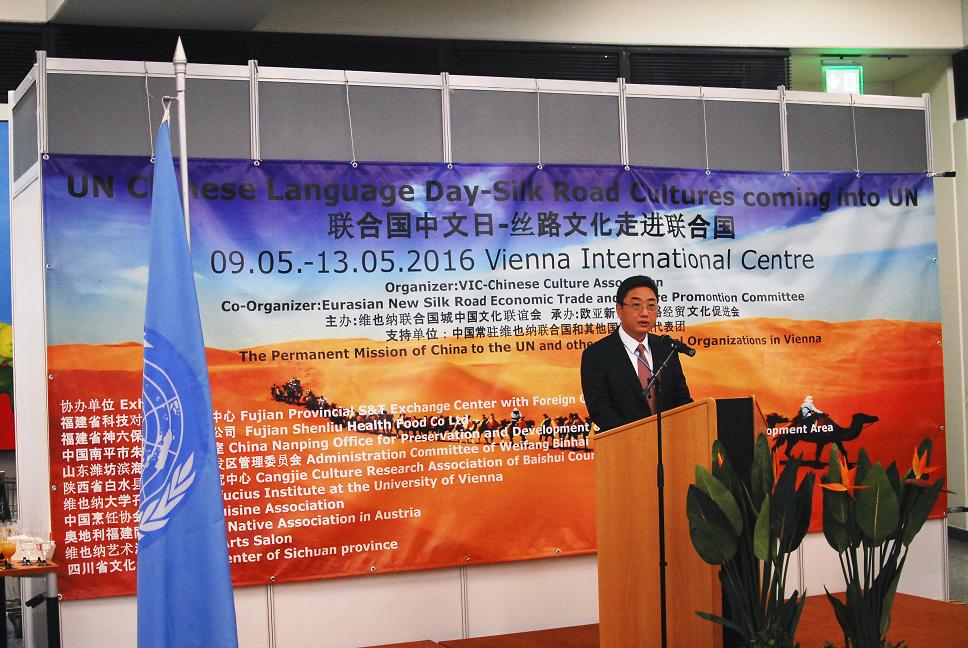
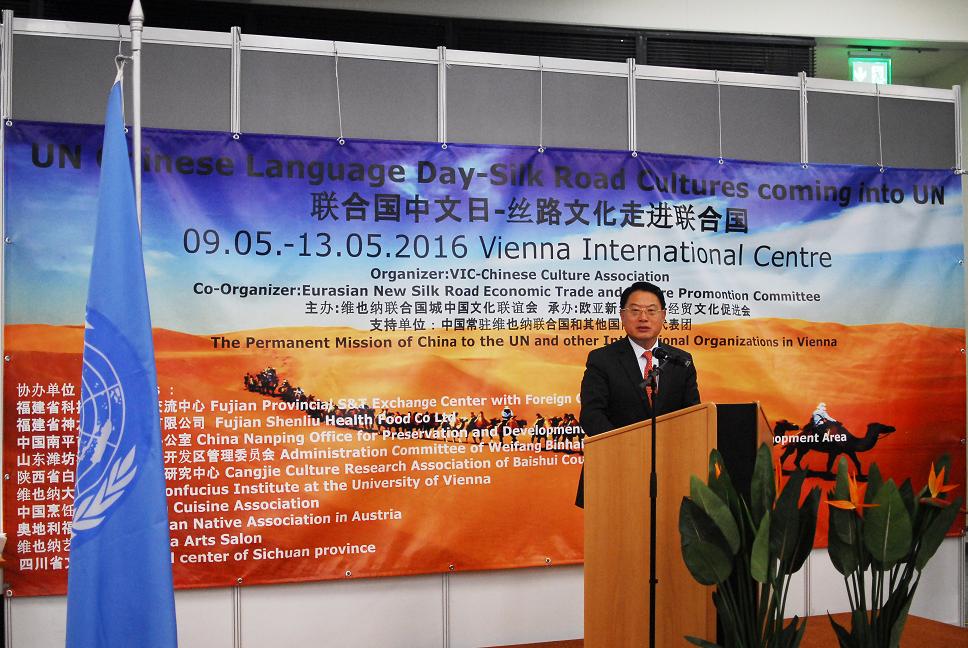
Opening Remarks at the UN Chinese Language Day Event
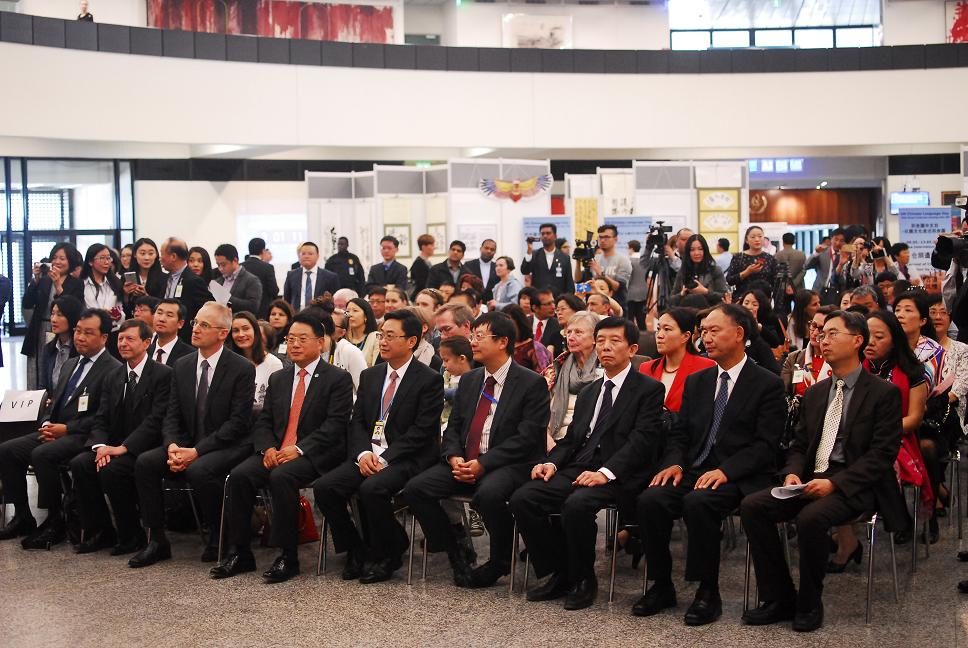
Your Excellency Director General LI Yong ,
Director Martin Nesirky of UNIS,
Distinguished Guests,
Ladies and Gentlemen,
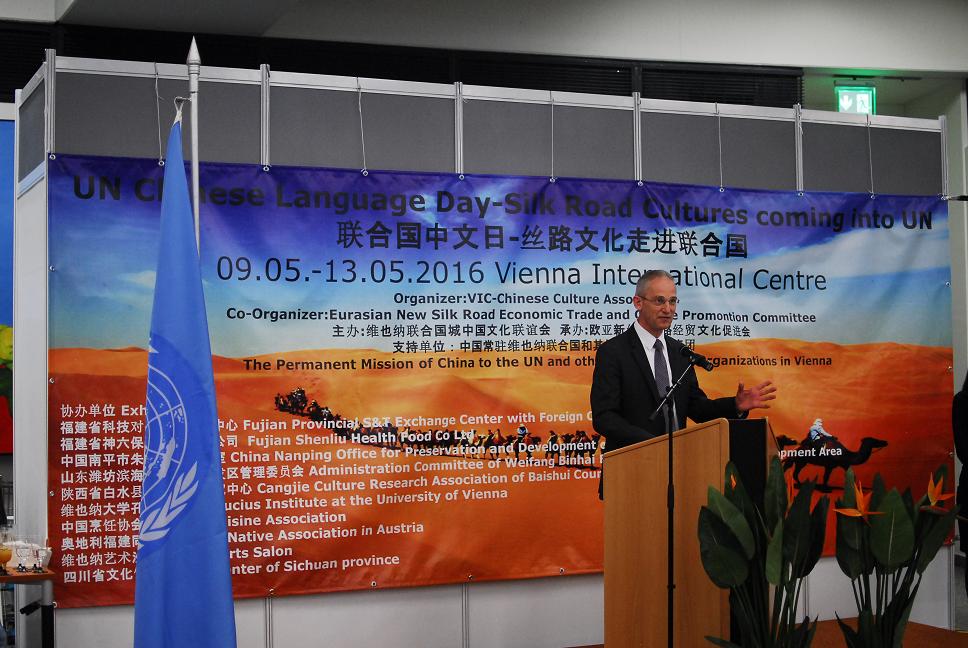
First of all, allow me to extend my warm welcome to you on behalf of the Chinese Permanent Mission. Chinese Language Day was initiated in 2010 by the Department of Public Information of the UN. The goal is to promote multilingualism, cultural diversity and interaction. This year the theme in Vienna is “Silk Road Cultures Coming into the UN”.
More than 2000 years ago, Emperor Wudi of Han Dynasty dispatched Zhang Qian, a Chinese explorer and imperial envoy on a mission to the western regions. His expedition opened an important continental trade route, beginning from Xi’an, stretching as far as Central, Western, Southern Asia and extending to Europe. Over the 2000 years, it has not only promoted the exchange of goods among the peoples but also cultural interaction in all aspects of various ethnic groups. In 1870s, the eminent German geographer Ferdinand von Richthofen, in one of his writings, named the trade route as "Silk Road", which was widely recognized by other countries.
As the continental Silk Road prospered, a maritime Silk Road was opened up, with the advancement of shipbuilding techniques. In the early 15th century, the great Chinese navigator Zheng He, who led the world's biggest fleet at the time on a total of seven expeditions, reaching as far as East Africa, the Red Sea and the Persian Gulf. They did not invade, colonize or swindle, but carried with them silk and porcelain for trade, widely spreading kindness and friendship of the Chinese people. Zheng He's fleet received welcome and assistance from the countries along the route. Touching stories about Zheng He are still being told to this day.
From the ancient times till now, the continental and maritime Silk Roads have complemented each other, writing a brilliant chapter in the history of human civilization and cultural interaction. In 2013, Chinese President Xi Jinping put forward the initiative of “promoting the Silk Road Economic Belt” and “building the 21st Century Maritime Silk Road”. Countries and peoples along the roads have applauded it. What we want to continue pushing forward is the ancient Silk Road spirit, featuring peace, friendship, openness, inclusiveness and mutual learning. What we want to follow are the principles of wide consultation, joint contribution and shared benefits. Connectivity, industrial capacity cooperation and people-to-people exchange form the three pillars of the initiative, among which industrial capacity cooperation is one of the major fields that China wishes to cooperate with UNIDO.
Ladies and gentlemen,
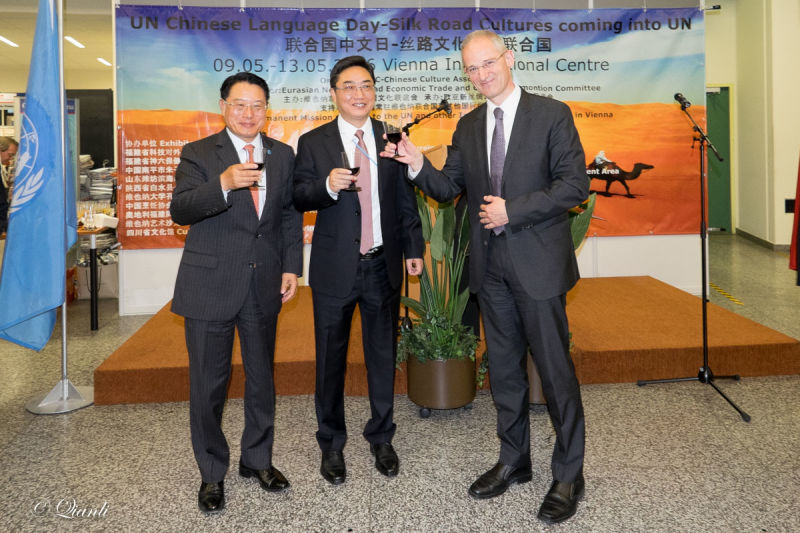
Cultural diversity and mutual learning are deeply embedded in the genetic and lifeblood of the Chinese nation. The purpose of today’s event is to carry forward Silk Road Culture and Spirit, enhance understanding and harmony of all countries and promote peace, development and cooperation around the world.
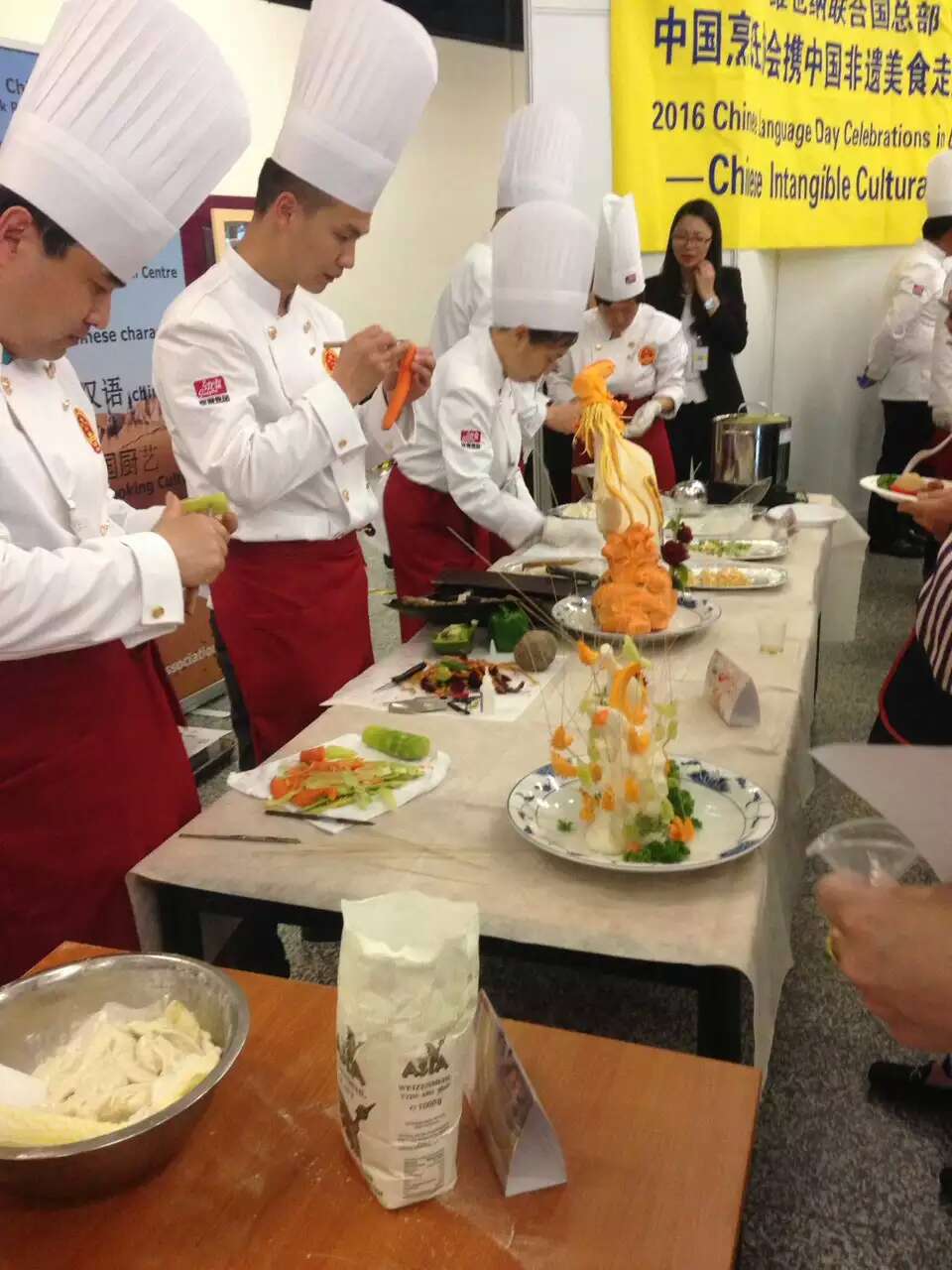
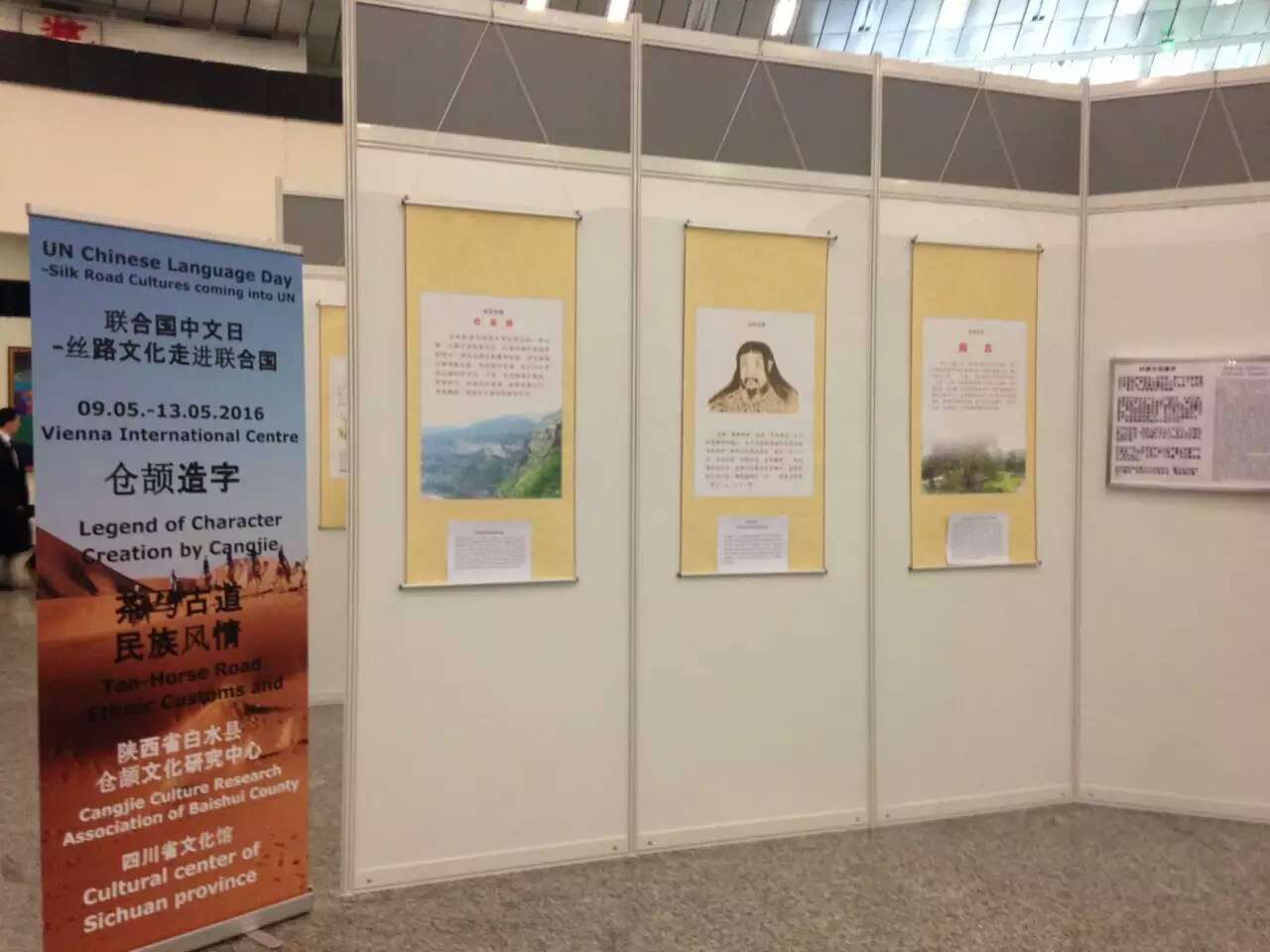
Today, we will show you the unique Chinese cultures along the Silk Road. Shanxi is the starting point of the continental Silk Road and the birthplace of Cangjie, who was the inventor of Chinese characters. Fujian is where the maritime Silk Road begins and also the hometown of the well-known Chinese philosopher Zhu Xi of Nansong Dynasty. Shandong is the birthplace of Confucian Culture. Stretching towards south Asia, the so-called Tea Horse Road was formed in Southwest China, where various ethnic minority groups have lived since ancient times. It is considered an important part of the continental Silk Road.
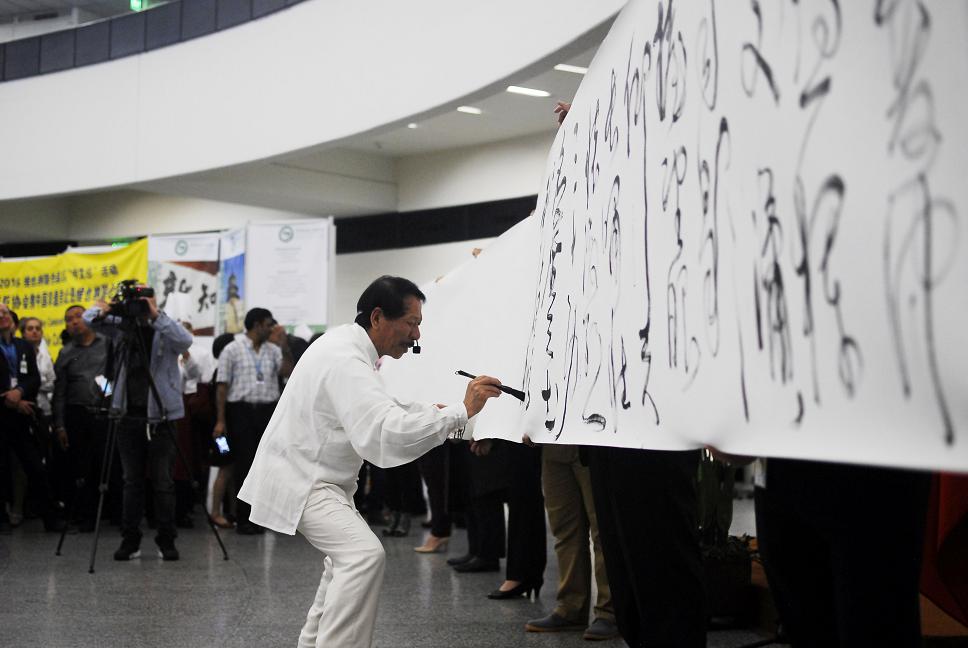
Finally, let me express my sincere gratitude to the United Nations Office at Vienna and UNIDO for your great support, and the Chinese artists for their active participation. My deep appreciation also goes to the Chinese Culture Association. Your hard work made the exhibition and shows possible. I wish everyone enjoy the Chinese food and tea, experience the Silk Road Culture and Spirit.
Thank you for your kind attention!